
 Gift Finder
 Gifts for Occasions
Different Types of Calendars Used Around the World
Calendars have played an important role in human societies for thousands of years. They help us organise days, plan events, mark religious observances and understand seasonal or astronomical cycles.
Over time, different cultures developed their own calendar systems according to religious, agricultural and astronomical needs. Some are based mainly on the Sun, some on the Moon, and others combine both. This guide looks at the major types of calendars used around the world and how modern photo calendars fit into everyday planning today.
What Is a Calendar?
A calendar is a system for organising time into days, months and years. Different calendar systems are built around different natural cycles. Solar calendars follow the Earth’s movement around the Sun, lunar calendars follow the phases of the Moon, and lunisolar calendars combine elements of both.
Historically, calendars helped societies plan farming cycles, religious festivals, civic events and seasonal activities. Today, calendars still perform those functions while also helping people organise work, appointments, travel, celebrations and personal schedules.
Modern Photo Calendars for Everyday Use
Alongside traditional calendar systems, photo calendars are a practical way to combine planning with personal memories. They can be used on desks, walls, refrigerators and workspaces, with different sizes and layouts suited to different spaces.
4.5x10 Desktop Photo Calendar
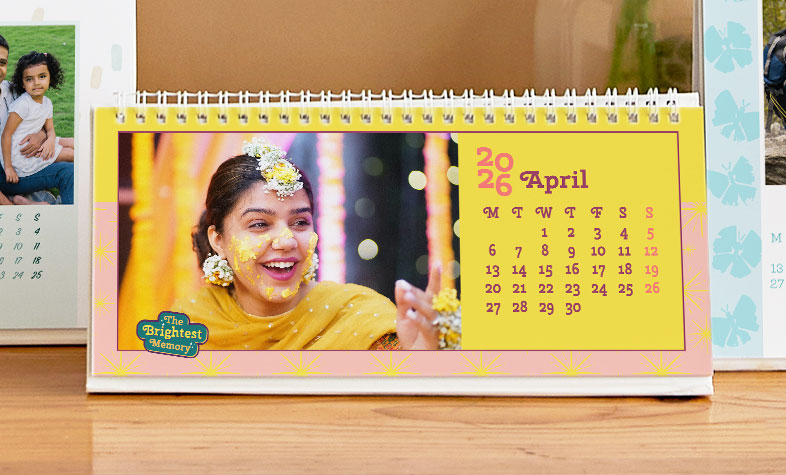
A wider desktop format works well when you want the calendar to feel more like a visual display piece. The 4.5x10 format gives photos more horizontal space while still keeping the dates easy to view on a desk.
Poster Calendar
A poster calendar combines wall decor with an at-a-glance view of dates. The larger format works well in study areas, bedrooms, kitchens and workspaces.
Photo Magnet Calendar
A magnetic calendar is compact and easy to place on a refrigerator or other magnetic surface. It works well when you want a small calendar that stays visible in an everyday space.
Desktop Photo Calendar
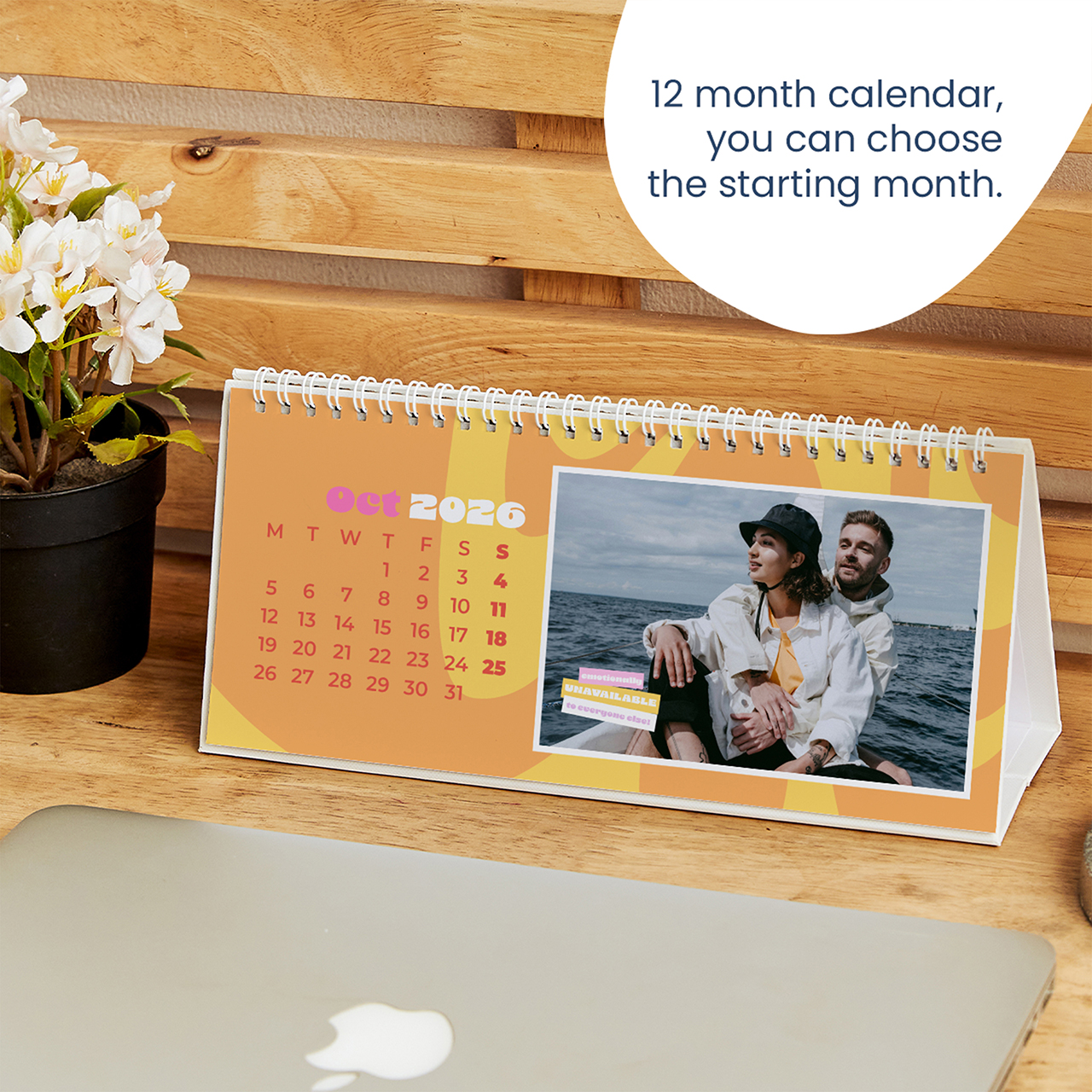
A desktop photo calendar keeps dates and memories close at hand. It is useful for work desks, study tables and home offices where compact planning is more convenient.
Wall Mount Portrait Calendar
Portrait wall calendars are useful for narrow wall spaces and offer a more vertical photo-led layout. They work well in kitchens, hallways and work areas where you want the calendar to remain easy to read.
Personalized Planner
A planner is better suited to detailed day-to-day scheduling, goals, appointments and notes. It complements a calendar when you need more room for planning.
Calendar Size & Layout Guide
Size and layout affect how useful a calendar feels in everyday life. Compact formats work best on desks and bedside tables, while larger wall formats make dates easier to read from a distance.
Portrait vs Landscape Wall Calendar: Which Is Better?
The best choice depends on your available wall space and the type of photographs you plan to use. Portrait calendars suit vertical images and narrower spaces, while landscape calendars are better for wide group photos, scenery and broader wall areas.
| Feature | Portrait Calendar | Landscape Calendar |
|---|---|---|
| Look and feel | Tall, classic and compact | Wide, balanced and contemporary |
| Photo display | Best for vertical photos and portraits | Best for landscapes and group photographs |
| Space fit | Works well on narrow walls | Better for wider wall areas |
| Usability | Easy to scan vertically | Can provide more horizontal planning space |
Choosing the Right Calendar Size for Your Space
- Compact sizes: useful for desks, bedside tables and small workspaces.
- Medium sizes: practical for kitchens, study areas and home offices.
- Large sizes: better for living rooms, shared spaces and office walls where dates need to be visible from farther away.
What Are the Benefits of Calendars?
Calendars help individuals, families, communities and organisations plan activities and mark important dates. Their usefulness goes far beyond simply counting days.
Cultural and Religious Importance
Many calendars determine the dates of important religious and cultural events. The Hindu calendar is used for festivals such as Diwali and Holi, while the Islamic calendar determines observances such as Ramadan, Eid and Hajj.
Agricultural Planning
Calendars were historically essential for farming communities. Ancient societies used seasonal and astronomical patterns to decide when to plant, harvest and prepare for environmental changes.
Astronomical and Scientific Use
Some calendar systems are closely tied to astronomical observations such as equinoxes, solstices and lunar phases. The Persian calendar, for example, is known for closely tracking the solar year.
You can also explore how to create photo calendars if you are more interested in designing a personal calendar than in calendar history.
What Calendars Are Used Around the World Today?
Several major calendar systems remain in active use around the world. Some are used for civil purposes, while others are mainly used for religious, cultural or traditional observances.
1. The Gregorian Calendar
The Gregorian calendar is the most widely used civil calendar in the world today. Introduced in the 16th century as a reform of the Julian calendar, it is a solar calendar with 365 days in a common year and 366 days in a leap year.
2. The Julian Calendar
The Julian calendar was introduced by Julius Caesar in 46 BCE. It is a solar calendar with a regular leap-year system. Although it was largely replaced by the Gregorian calendar for civil use, some Orthodox Christian communities still use it to determine certain religious dates.
3. The Hindu Calendar
The Hindu calendar is a lunisolar calendar used across India for religious and cultural purposes. It combines lunar phases with the solar year and is used to determine the timing of festivals such as Diwali, Holi and many regional observances.
For civil purposes in India, the Gregorian calendar is widely used alongside traditional calendar systems.
4. The Islamic (Hijri) Calendar
The Islamic, or Hijri, calendar is a lunar calendar used by Muslims worldwide. Because its months follow lunar cycles, the Islamic year is shorter than the solar year, so religious dates such as Ramadan and Eid move through the seasons over time.
5. The Chinese Calendar
The traditional Chinese calendar is lunisolar, combining lunar months with the solar year. It is still used to determine traditional holidays and cultural observances, including Chinese New Year.
6. The Hebrew Calendar
The Hebrew calendar is a lunisolar calendar used by Jewish communities to determine religious dates including Passover, Yom Kippur and Rosh Hashanah.
7. The Persian Calendar
The Persian, or Solar Hijri, calendar is a solar calendar used in Iran and Afghanistan. Its year begins around the spring equinox and is known for closely tracking the solar year.
8. The Buddhist Calendar
Versions of the Buddhist calendar are used in several Southeast Asian countries, including Thailand, Cambodia and Myanmar. It is used primarily for religious and traditional observances and is historically connected to older Indian calendar systems.
9. The Japanese Calendar
Japan uses the Gregorian calendar for civil purposes alongside an era-based year system tied to the reign of the emperor. The era system is commonly used in official and historical contexts.
Traditional Calendar Systems vs Everyday Photo Calendars
Traditional calendars help cultures organise religious, civic and seasonal time. Modern photo calendars serve a different purpose: they make everyday planning more personal. If you are looking for a practical calendar for your desk or wall, explore Zoomin’s personalized photo calendars.
Final Thoughts on Different Types of Calendars
Calendars are more than tools for tracking dates. They reflect history, astronomy, culture, religion and the practical need to organise human life. From solar and lunar systems to lunisolar calendars used for major festivals and observances, different calendar types continue to serve distinct purposes around the world.
For everyday planning, photo calendars offer a more personal way to organise dates while keeping favourite memories visible throughout the year. Zoomin offers desktop, wall, magnet and poster formats so you can choose the layout that best suits your space.

FAQs on Types of Calendars
What is the most commonly used calendar in the world?
The Gregorian calendar is the most widely used calendar for civil purposes worldwide. Other calendar systems, including Hindu, Islamic, Hebrew and Chinese calendars, continue to be important for religious and cultural use.
Why do different cultures have different calendars?
Different cultures developed calendars around their own religious traditions, astronomical observations, agricultural cycles and historical systems of timekeeping.
What are the main types of calendar systems?
The three broad categories are solar calendars, lunar calendars and lunisolar calendars. Solar calendars follow the Sun, lunar calendars follow Moon phases, and lunisolar calendars combine both.
Which calendar is used in India?
The Gregorian calendar is widely used for civil purposes in India, while Hindu and regional calendars are also used for religious festivals, cultural observances and traditional dates.
Are ancient calendar systems still used today?
Yes. Calendar systems with ancient roots, including the Hindu, Hebrew, Persian and Chinese calendars, are still used for cultural and religious purposes today.
What are photo calendars?
Photo calendars are personalized calendars that combine dates with your own photographs. They are commonly available as desktop, wall, magnet and poster formats.
Which types of photo calendars are available on Zoomin?
Zoomin offers desktop photo calendars, wall calendars, magnet calendars and poster calendars in different layouts and sizes.